Lord - I am not worthy

One of the humble moments in Catholic Mass is when we are invited to take the host, the bread and water that have been transubstantiated to become the body and blood of Christ. The priest raises the body and blood and says the prayer:
"Behold the Lamb of God,
Behold him who takes away the sins of the world.
Blessed are those called to the supper of the Lamb."
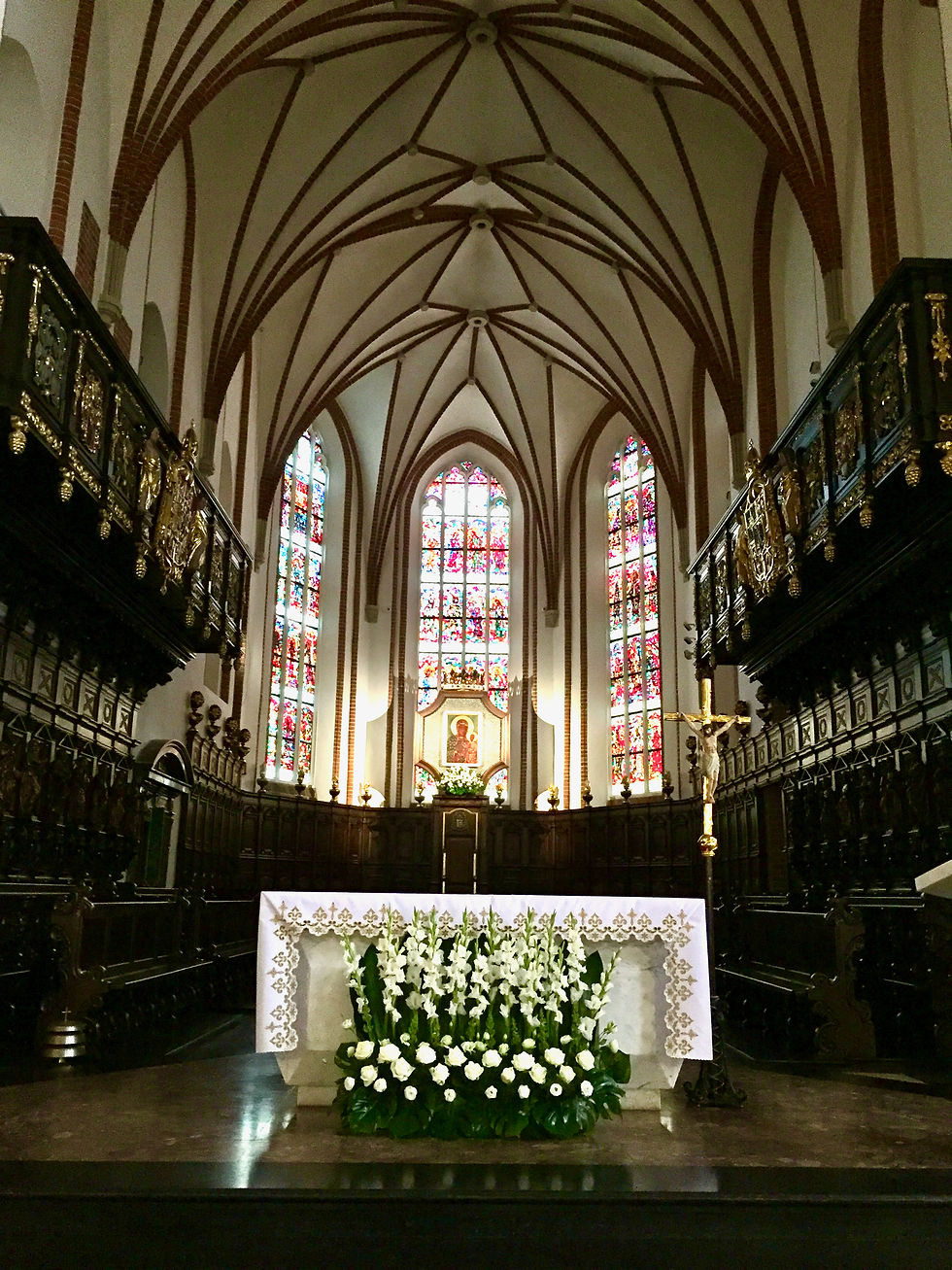
The people pray by saying:
"Lord, I am not worthy
that you should enter under my roof,
but only say the word
and my soul shall be healed."
One can very quickly connect these two sentences to the story of the humble and faithful Centurion described in the Gospels according to Matthew, Chapter 8, verses 5-13, and Luke, Chapter 7, verses 1-10.
Both Matthew and Luke describe the encounter as occurring immediately after Jesus enters Capernaum, following his great sermon on the Mount in Galilee.
While Matthew brings the conversation between Jesus and the Centurion straight to the point, Luke adds the detail that tells the background of this particular Centurion. In Luke's account, the Centurion did not ask Jesus directly, but sent the elders of the Jews to Jesus to ask him to come and save the life of his dying slave. Luke also described the Elders' compliments about this Centurion: that he deserved it, as he loved his nation and had built the synagogue for them.
Why did Luke add this detail? Going back to the Roman occupation era, a centurion was a military officer in the Roman Army, a principal professional officer commanding a centuria, which was 100 men. According to Britannica, a centurion was usually a common soldier who rose through the ranks and enjoyed much greater wealth and social status. In Jesus' time, centurions also held ruling and administrative authority in places the Roman army had conquered. We could also expect the Jews to be often oppressed by these Roman military rulers. Thus, from Luke's writing, we learnt from the elders that this Centurion was special in using his authority to do good things for the Jews, the people under his rule.
Knowing that Jesus was willing to help, we were told that the Centurion sent a messenger to tell Jesus, "I am not worthy" that Jesus come to him, "but say the word and let my servant be healed."
In both Gospels, the Centurion explains why. As a person of authority himself, he fully understood what true authority could do. Knowing that saving the life of his dying servant would be something quite impossible, he put his faith in Jesus, believing Jesus had the power to heal his servant. The Centurion has demonstrated conversion in Jesus' time.
Jesus was obviously amazed. Jesus turned to those following him and said that he had found no one in Israel with such faith. Matthew also wrote about the response of Jesus to the Centurion:
"You may go, as you have believed, let it be done for you."
It is, therefore, a perfect selection of this prayer from the Centurion to remind us how unworthy we are to receive the Body and Blood of Jesus and how much love God has given us. At the same time, like the Centurion, we profess our faith that our souls will be healed because of Jesus. And we know that Jesus will say to us, "as you have believed, let it be done for you."



Comments